SMF
Empowering inclusivity through design innovation and AI
Context
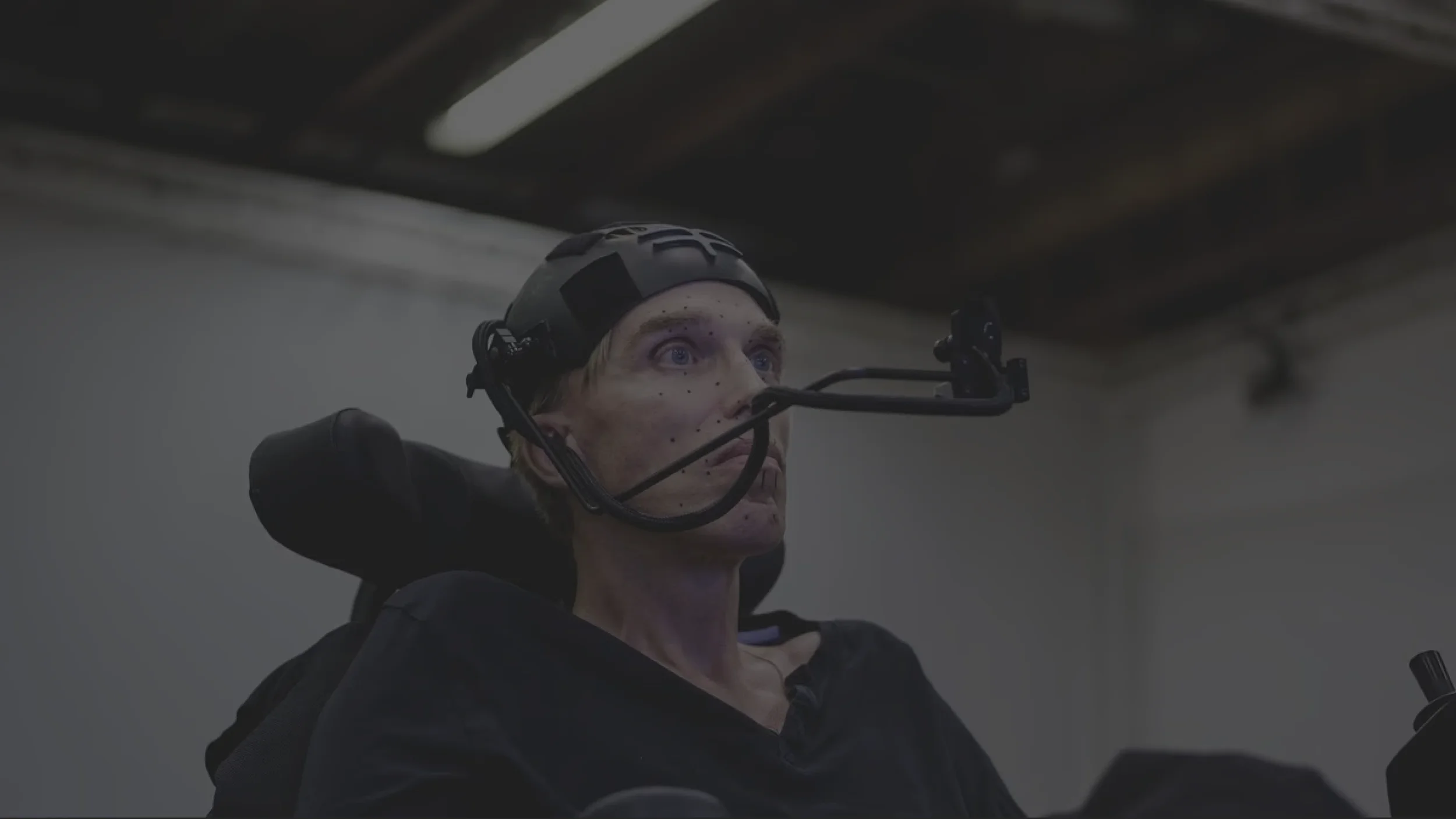
The Scott Morgan Foundation is a non-profit organisation that was born from the relentless ambition and optimism of Dr Peter Scott-Morgan, the visionary robotics scientist who reimagined his own future with MND (Motor Neurone Disease) after being diagnosed in 2007.
ALS (Amyotrophic lateral sclerosis), also known as Lou Gehrig’s disease, is a progressive neurodegenerative disorder that affects motor neurons in the brain and spinal cord. Motor neurons control voluntary muscle movements.
These diseases eventually affect the control of the muscles needed for movement, eating, breathing, and speaking. Therefore, directly impacts patients’ communication skills.
Working together with tech partners, we are helping the organisation make assistive technologies more accessible and intuitive for vulnerable patients with those conditions.
Design approach
01
Reimagining a hands-free keyboard
To address this life-changing challenge that patients face, we have been helping the Scott-Morgan Foundation to develop solutions that enable new communication possibilities for people with severe disabilities.
More specifically, for patients in advanced stages of the condition, who, on some occasions, are only able to move their eyes.
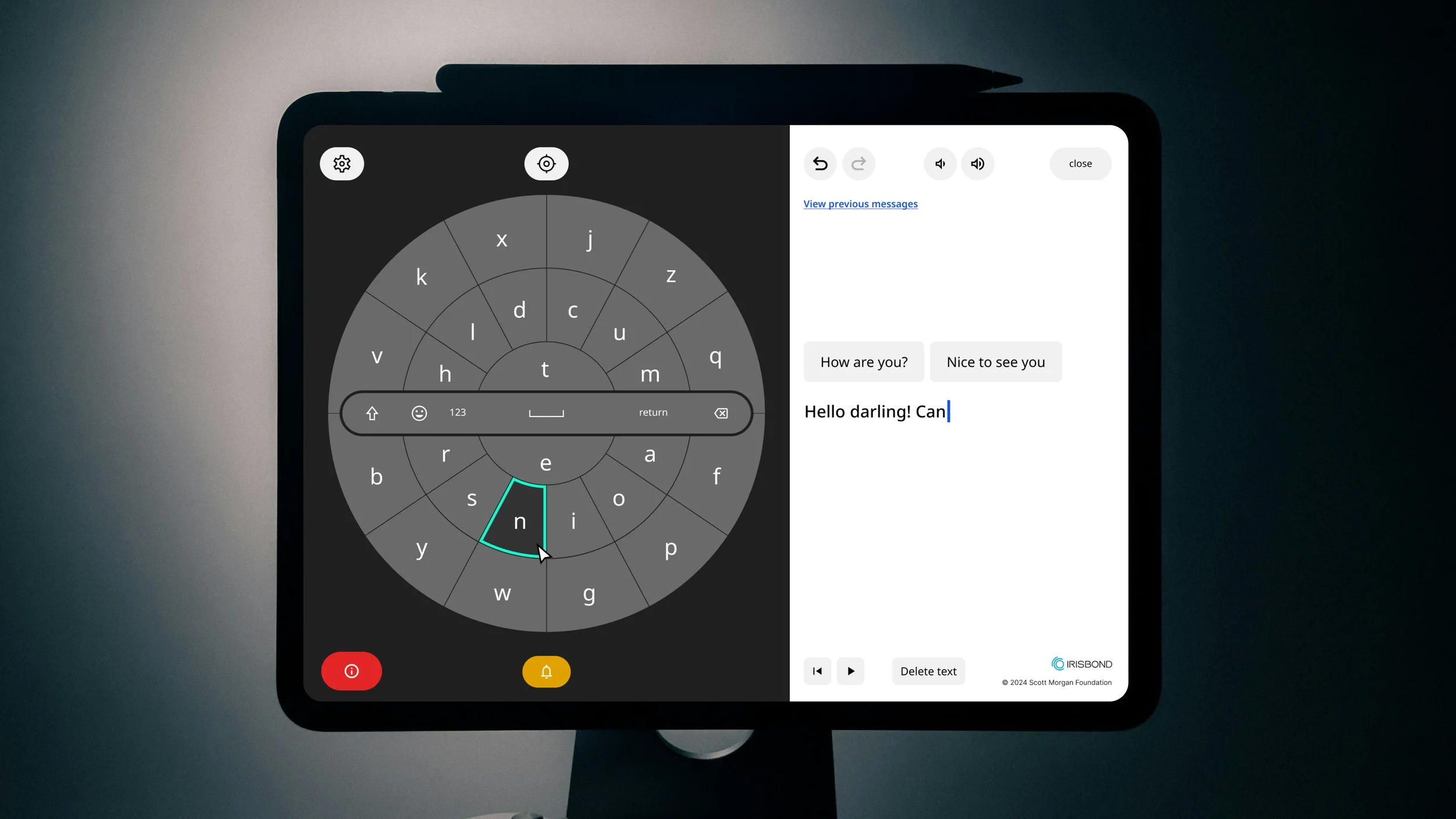
We have designed an intuitive circular keyboard that can be operated using the patient's iris via eye-gaze tracking provided by IRISBOND, the pioneers in eye-tracking technology.
Reducing fatigue and maximising typing time
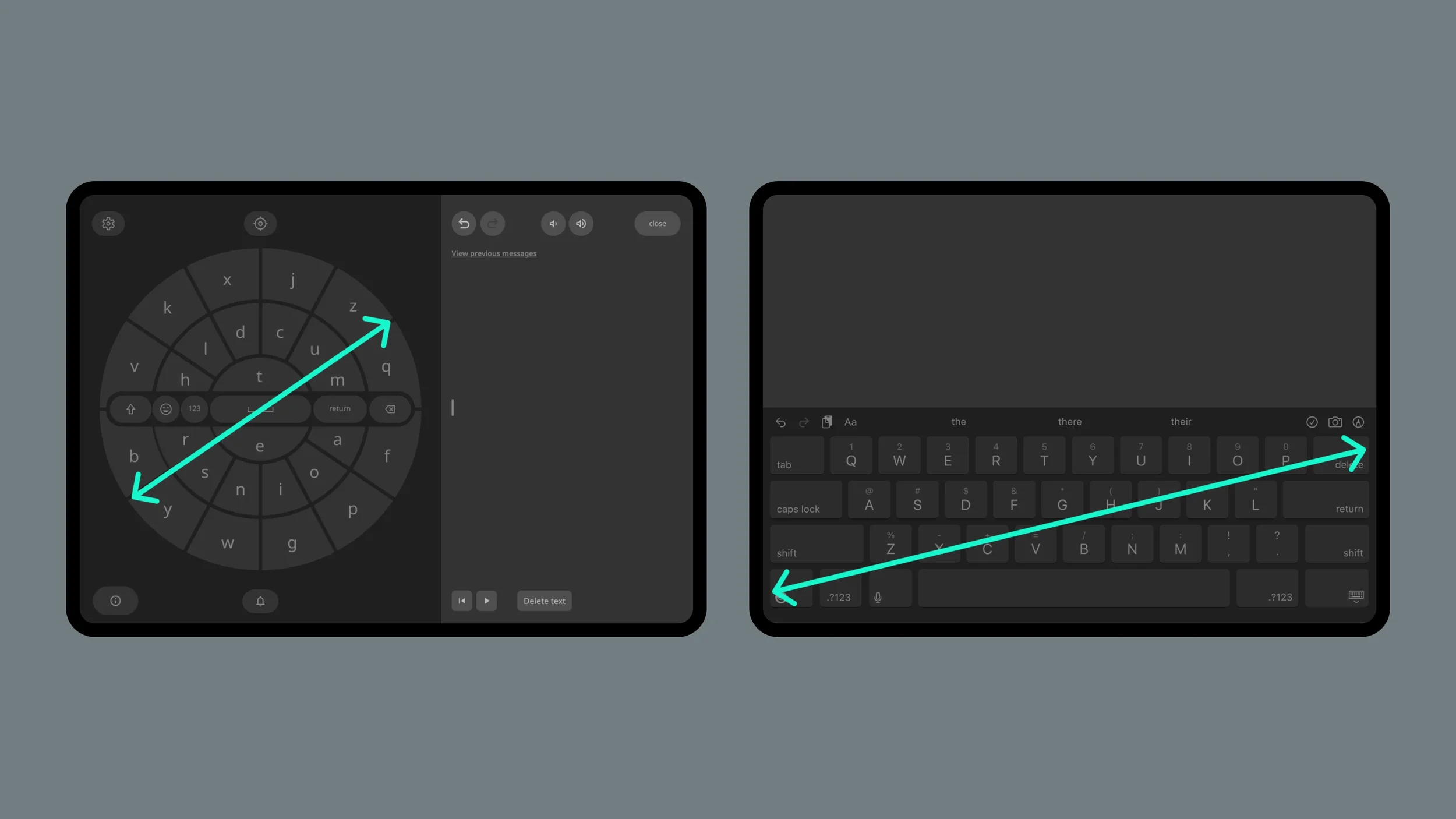
To minimise user fatigue during navigating through the keys, decrease typing time and allow easy, extended communication.
We arranged characters and numbers within a circular and optimal area of the keyboard, enabling users to scan keys over shorter distances, making it more comfortable to use compared to a traditional keyboard, where users need to navigate longer distances to select the letters.
02
Empowering predictive text
The keyboard also includes predictive text message functionality, allowing patients to formulate sentences intuitively by simply moving their eyes. This helps users to reduce the effort to type messages and makes communication intuitive and effective.
Lenovo developed a personal, on-device LLM dedicated to reliably providing the power of generative AI to people with disabilities. By compressing a larger public LLM, the team at Lenovo’s AI Innovation Centre created a powerful predictive text tool optimised for people who cannot use a traditional keyboard.
03
Hyper-realistic AI-powered avatar
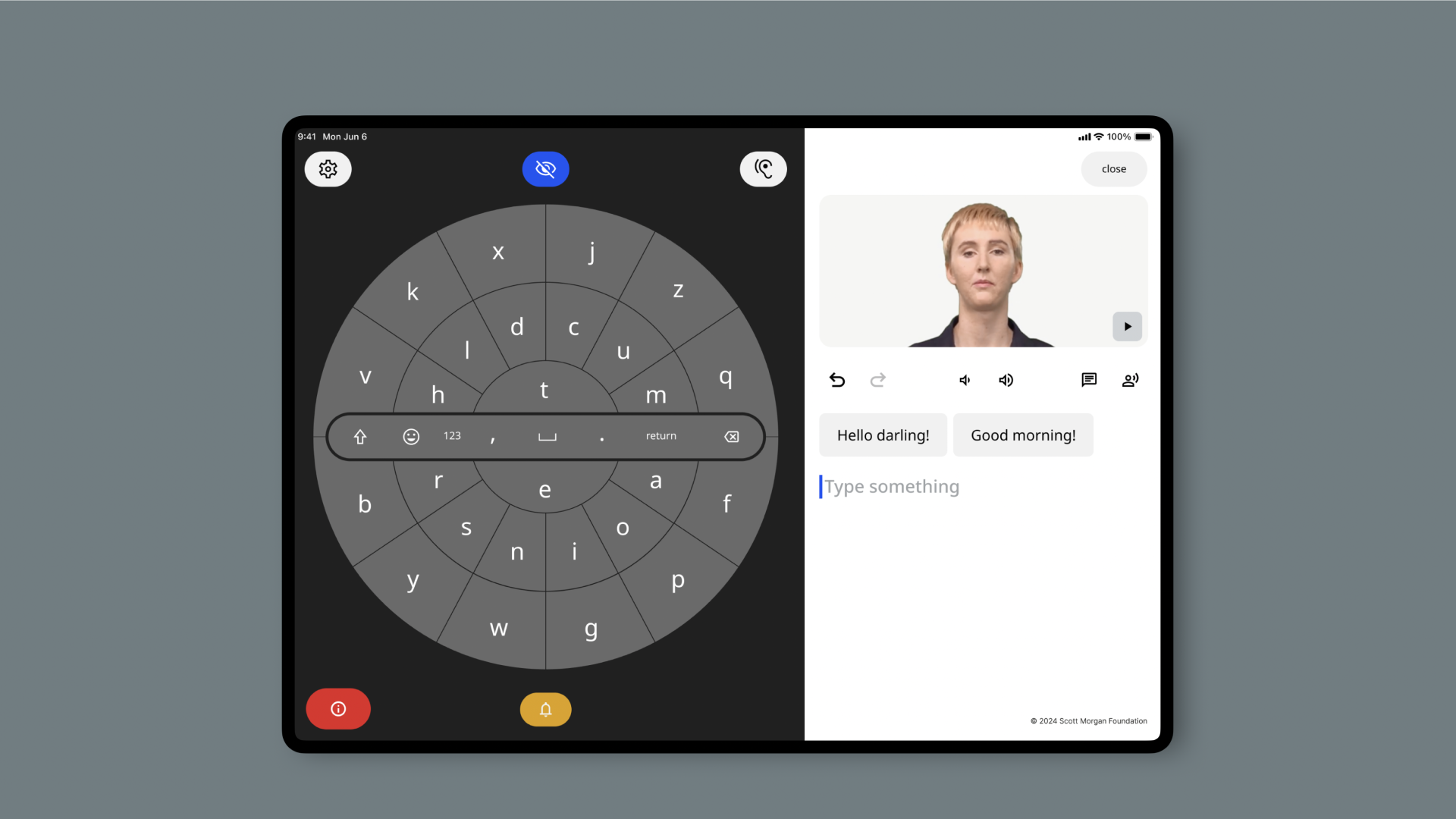
Together with Lenovo and DeepBrain AI, the foundation is developing a hyper-realistic AI-powered avatar to serve as groundbreaking assistive technology. This avatar captures the unique personality, voice, mannerisms, and full body of the patient, enhancing communication between patients and their families.
This technology represents a significant advancement over traditional voice banking and text-to-speech engines, as it can dynamically transform text into a generative AI video.
Additionally, the foundation is partnering with other tech leaders to create a multi-modal platform that works alongside companies such as LUCI, EarSwitch, and Augmental to greatly improve social connections for individuals with disabilities. These concepts have been tested and received very positive feedback from both users and their families.
Main contributions
High-fidelity prototyping
UI component library
Stakeholder workshops to define scope, align requirements and KPIs
Supporting the user research team on user testing.
More recent projects
TSB
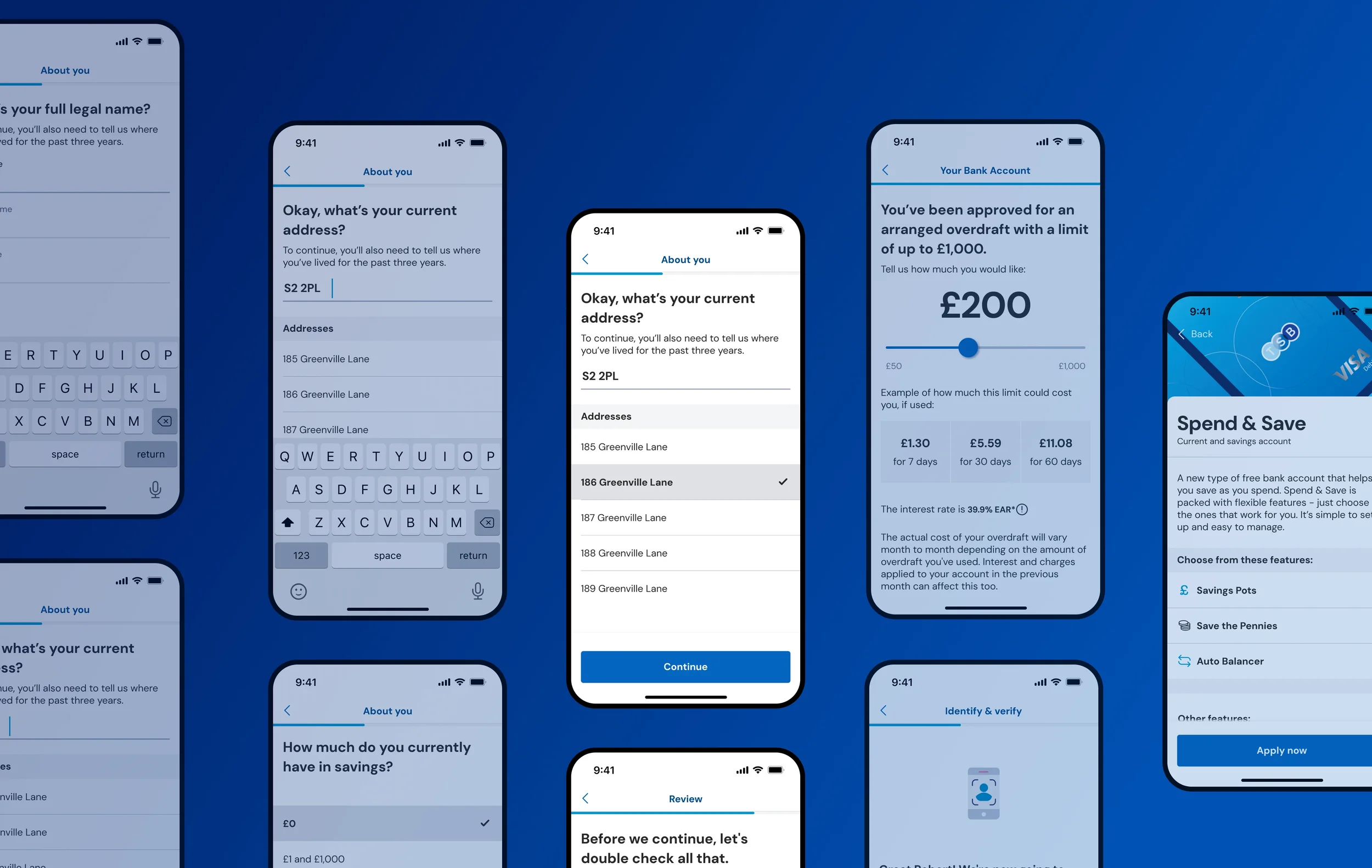
Supporting TSB's strategy in defining a new revenue-generating digital onboarding journey to build financial confidence for everyone.

The FA
Leading the design of a strategic AI proposition that benefits grassroots coaches and players in developing their skills.
B&Q
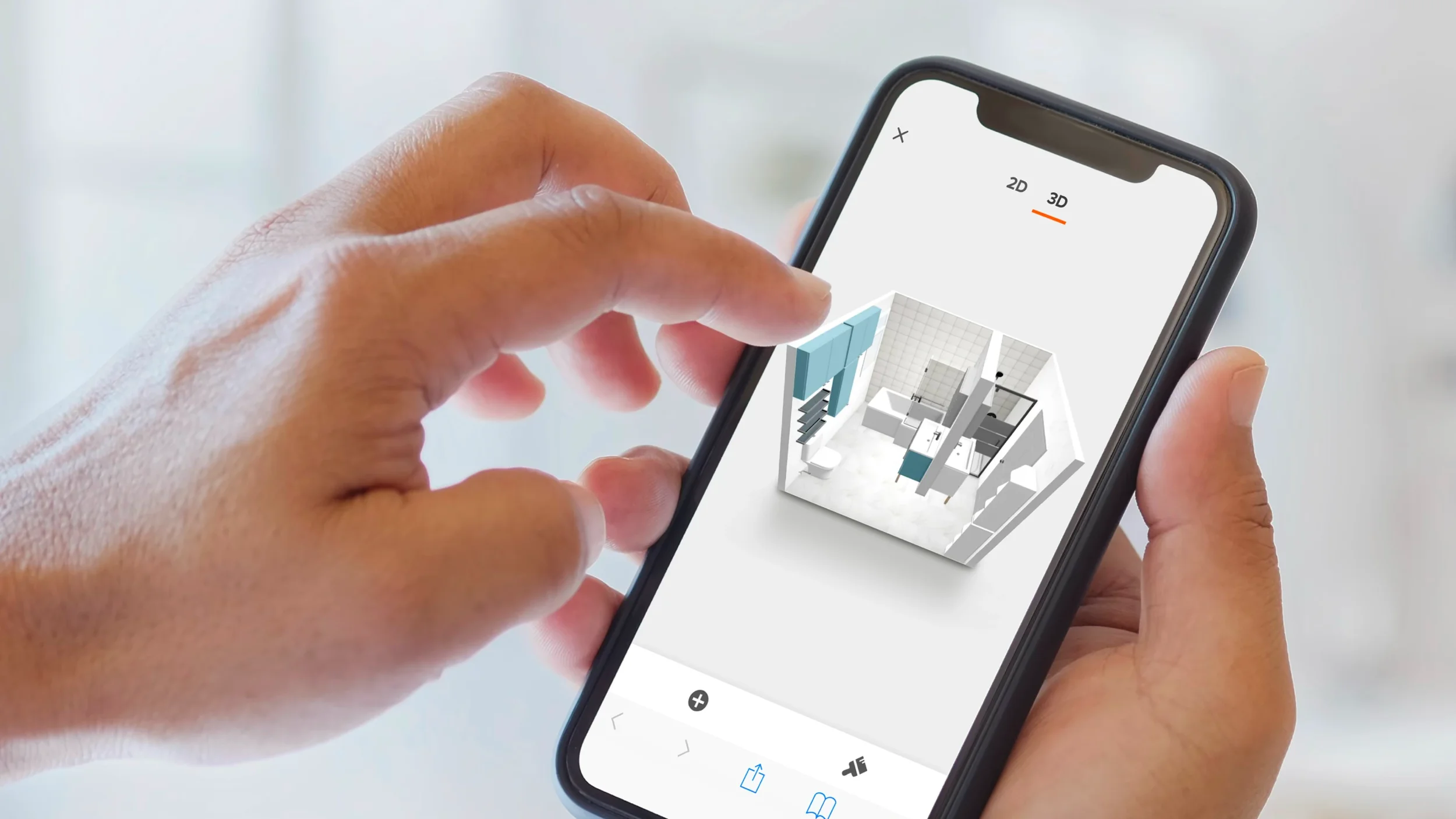
Enabling customers to design and visualise their dream projects through cutting-edge digital product innovation and strategic insights.